

We learned to cook by reading.
Before we opened the doors fourteen years ago, there were books. Dog-eared, oil-stained, passed between kitchens and suitcases. Not recipes — perspectives.
The Library
Books that change how you think before they change how you cook.
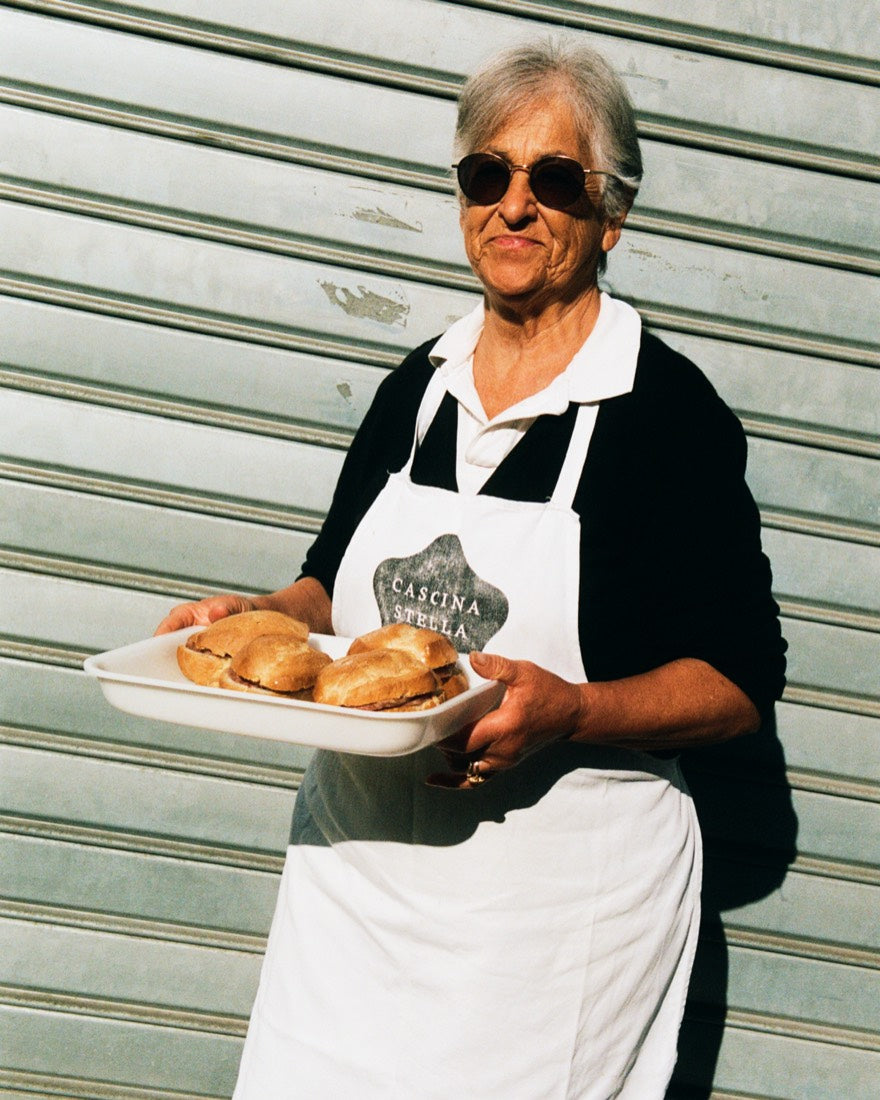
Our shelves hold a particular kind of book. Not the glossy volumes that arrive each autumn, but the quiet ones — written by people who have spent decades with flour on their hands and soil under their nails. A grandmother in Puglia who never measured anything. A winemaker in Piemonte who talks about patience the way others talk about technique. These books do not teach you a dish. They teach you a way of being in a kitchen.
Not recipes. Perspectives.
Open any book in our collection and you will find margins filled with notes, pages stained with olive oil, corners folded down so many times they have gone soft. These are not coffee-table objects. They are working documents — carried between Copenhagen and Italy, consulted at midnight before a menu change, passed from one cook to the next like a quiet inheritance.
A good cookbook is not read once. It lives on the counter, collects flour dust, falls open to the same page every November. It becomes part of the kitchen itself.
A book is how one kitchen speaks to another across decades. The grandmother in Lecce and the cook in Copenhagen, connected by a single paragraph about dough.
We do not collect books to display them. We collect them because every menu we have ever written began as a sentence on a page.
The authors we trust have calluses. Their authority comes from repetition, not theory. They write the way they cook — with their hands.
Written by people who cook.
Every author in our collection has spent years at the stove. They are chefs, farmers, preservers, bakers — people whose words carry the weight of ten thousand repetitions. You can feel it in the writing. There is no performance, no styling. Just clarity earned through doing the same thing, with care, for a very long time.
On Authority
Theory is comfortable. Repetition is honest.
There is a difference between a book written at a desk and a book written at a stove. We can always tell. The desk books explain. The stove books remember. They recall the exact moment a dough changes under your hands, the smell of a ragu at the three-hour mark, the sound of bread when it is ready. We keep the ones that remember.
A kitchen library, curated.
We have kept this selection deliberately small. Each title earned its place over years of daily use in our own kitchen. If it is here, we cook from it still. We offer them now not as products, but as the same quiet recommendations we would make to a friend who asked: where do I begin?