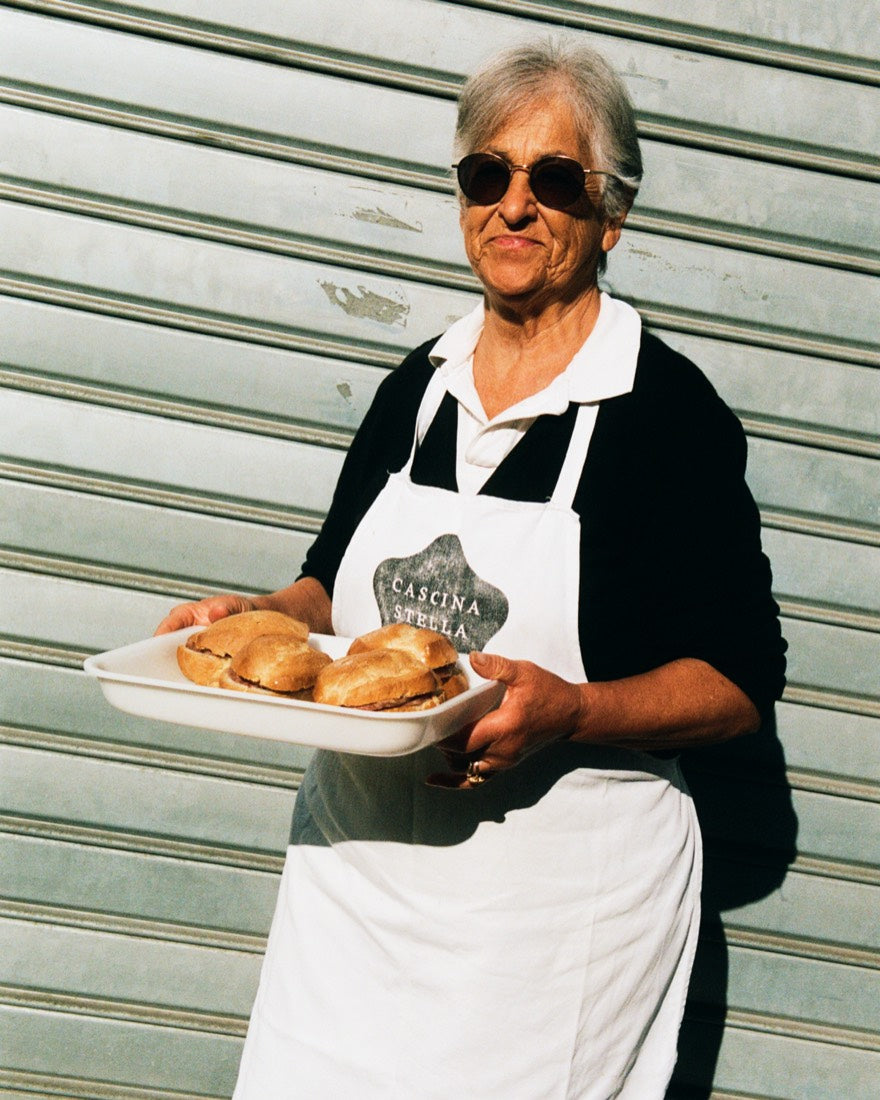


Before the recipe, there was a way of living.
Italian food is not a cuisine. It is a daily negotiation between land, season, and the people sitting across from you. This is the culture we learned from.
The Market
It begins at seven, before the city is fully awake.
The morning market is not a shop. It is a conversation repeated six days a week between people who have known each other for decades. The fishmonger does not sell you what you ask for — he sells you what arrived at four a.m. The vegetable seller holds back the ugly tomatoes for the cooks she trusts, because she knows they taste better. Nothing is labelled organic. Everything is understood.
The rhythm that decides the menu.
In Italy, you do not plan a meal and then go shopping. You go to the market and let the market decide. The best peaches dictate dessert. The octopus that just arrived becomes the second course. Cooking is an act of listening.
A table is not furniture. It is a place where people become themselves again.
Food culture is not a tradition to be preserved in glass. It is a living argument — between the grandmother who insists on lard and the grandson who uses butter, between the old way and the new morning.
The meal is never about the meal. It is about who showed up, what was said, how long you stayed. The food is the reason you sit down. The conversation is the reason you do not leave.
Simplicity is not a style choice. It is earned. It takes decades of cooking to arrive at a plate with three ingredients and the confidence to leave it alone.
The Table
Every important thing in Italian life happens while eating.
Deals are made over lunch. Arguments are settled over dinner. Children learn to listen by sitting at a table where adults are talking. The table is classroom, parliament, confession booth. It is the one piece of furniture that carries the full weight of a family. In Italy, when someone says ‘come to the table,’ they are not offering food. They are offering belonging.
We did not take this. We were taught.
This culture was never ours to claim. It was shown to us — slowly, over years, by people patient enough to let us make mistakes. We learned by watching, by being corrected, by being invited back. Whatever we carry from Italy, we carry because someone chose to hand it to us.
The culture is the product.
Everything we sell — the books, the food, the objects — is an attempt to carry this feeling across a border. Not the recipes. Not the ingredients. The understanding that a meal, done properly, is the most human thing we do.