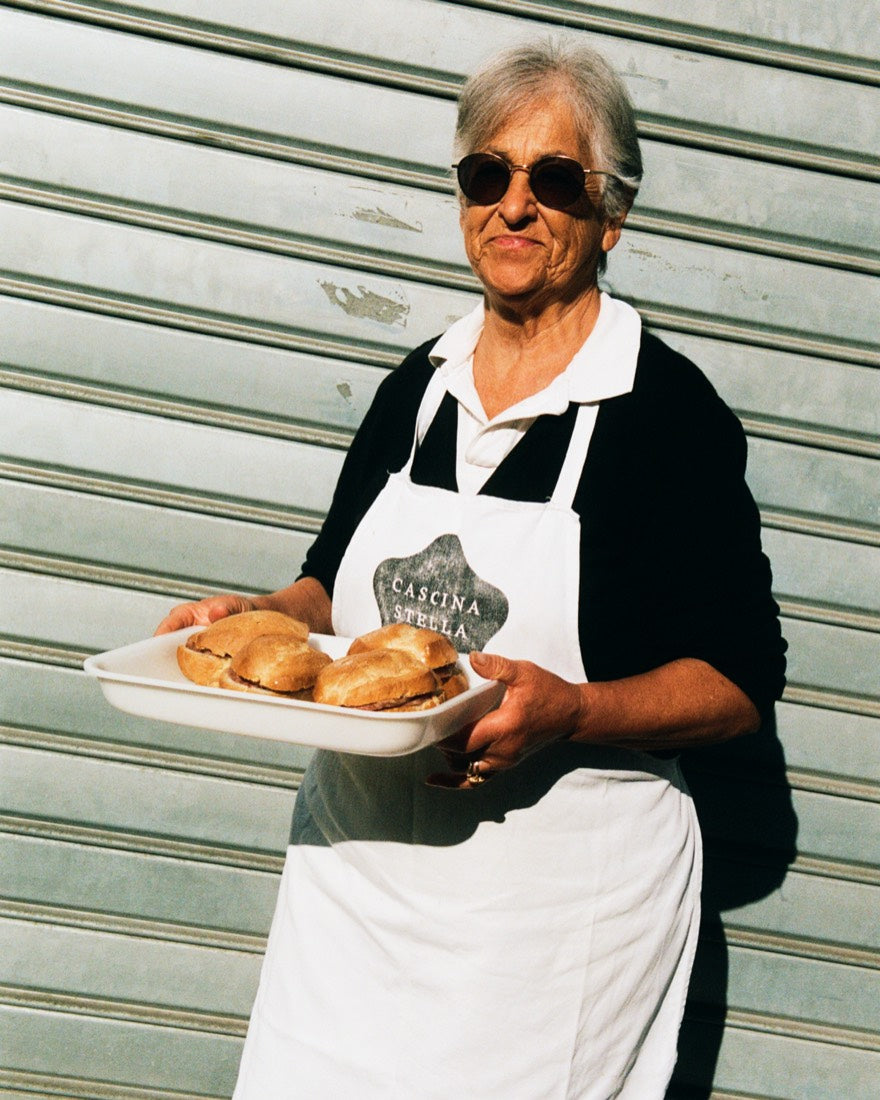


Some things cannot be invented. Only passed down.
Italian food culture is built on inheritance. Recipes, vineyards, and small family businesses handed from one generation to the next. Knowledge that cannot be rushed into existence. We work with the people who carry it.
The Producers
Behind every product is a family that chose not to stop.
They could have sold the land. They could have modernised the process, scaled up, moved on. Instead they kept going — the same fields, the same drying racks, the same cellars their grandparents built. Not out of nostalgia. Out of a quiet conviction that the way they learned to do it is the way it should be done. These are the people we work with. Small family businesses where the knowledge lives in hands, not manuals.
The family who stayed.
In a village where most young people leave, there are families who stay. The grandfather planted the vines. The father learned to prune them by watching. The daughter now runs the harvest. Three generations, one piece of land, and a knowledge that compounds like interest — slowly, silently, irreversibly.
Patience is not a virtue in these families. It is simply how long things take.
Inheritance is not nostalgia. Nostalgia looks back. Inheritance carries forward.
It is accumulated wisdom — generations of hands learning what the soil needs, how long the dough rests, when the olive is ready. Knowledge that cannot be downloaded or fast-tracked.
To inherit a craft is to accept a responsibility: that what was given to you must reach the next pair of hands in at least as good a condition as you received it.
The Winemaker
His grandfather planted the vines. He has never considered pulling them up.
The vineyard is small — too small to interest the large distributors, too steep for machines. He works it by hand the way his grandfather did, not because he romanticises the past, but because the terrain demands it. The grapes are native varieties that fell out of fashion decades ago. He kept growing them anyway. The wine they produce cannot be made anywhere else, from anything else, by anyone who did not grow up walking these rows. He does not call it natural wine. He calls it his wine.
What the cellar remembers.
Below the farmhouse, the cellar holds every vintage the family has made. Some barrels are older than anyone still alive. The temperature stays the same year-round — not by design, but by stone and earth and depth. It is a room that teaches you something about time: that the best things are not made, they are waited for.
We are still learning.
Every time we visit a producer, we leave knowing more than we arrived with. Not about techniques or trends — about patience. About the distance between knowing a recipe and understanding why it works. About the quiet confidence of people who have done the same thing, the right way, for longer than we have been alive. We do not inherit their craft. But we carry their products, and with them, the obligation to represent that work honestly.